About Problem Define Process Validation Decisions Final Design My Role Impact Reflections
All Projects
W
Walmart

Walmart Pass

A Walmart customer walks into a store, fills their cart, checks out, and walks out. Walmart has no idea it was them. No profile linked, no loyalty tracked, no purchase history captured. That accounts for 40% of all in-store transactions.

Walmart Pass is a universal QR identity platform designed to close that gap: a single scan that connects any Walmart account holder to their profile at any register, regardless of how they pay.

Role
Senior Product Designer, end-to-end from research through final design delivery
Scope
0→1 product design, competitive analysis, in-store QR platform, cross-functional
Outcome
Fully designed and validated through prototype testing. Project paused during company-wide restructuring prior to pilot launch
Product Design 0→1 Creation Mobile Platform Design E-Commerce
Walmart Pass hero - two phones showing Walmart Pass app

Understanding the challenge

The Problem

240M+ weekly customers, but a huge portion of in-store transactions are anonymous. No profile, no loyalty, no purchase history.

The Opportunity

Redesign Walmart Pay from end to end, enabling 100% of in-store customers to identify themselves at any register, regardless of how they pay.

User Interviews
"I always lose my receipt. There's no easy way to track what I bought or earn loyalty rewards in-store."
Customers want a unified identity system that works across payment methods, reducing checkout friction and connecting their digital account to physical transactions.
Store Operations Data
"We can't connect cash transactions to customer identity. 40% of our GMV has zero traceability."
Without traceability, Walmart loses business intelligence for merchandising, customer segmentation, and store-level performance.
Competitive Benchmarking
"Fast, one-tap identification at checkout is becoming table stakes for modern retail."
Target, Starbucks, and Amazon Go all offer sub-3-second identification. Walmart must match this to stay competitive in frictionless checkout.
Engineering Feasibility
"QR codes solve the speed problem: scan, identify, transact. All under 3 seconds."
A QR-based platform can enable feature scaling across services while maintaining military-grade security and sub-second identification times.

Walmart Pay

Walmart Pay works at self-checkout only, for payment only. No pre-identification, no loyalty, no broader services.

One transaction type, one touchpoint. Cash customers, assisted checkout, and other services have zero digital identity.

  • Only available at self-checkout. No assisted checkout support
  • Payment-only. No connection to loyalty, rewards, or returns
  • No pre-identification—customers must complete setup each time
  • Security concerns with exposed payment information on screen

What is Walmart Pass?

One scan to self-identify and pay, transforming Walmart Pay into a universal platform any team can plug into.

Key Features

Quick Identification

Sub-2-second scan-to-identify across all register types. Customers connect instantly without fumbling with apps or payment methods.

🔒
Secure & Private

Encrypted QR that rotates every 30 seconds. No personal or payment information is ever visible on-screen or extractable by third parties.

🔗
Extensible Platform

Built as a platform layer that any Walmart service can integrate with: from pharmacy to auto care to returns.

The Vision For Walmart Pass

One identification layer for every Walmart service: checkout, returns, auto care, pharmacy, and Walmart+ all share the same scan-to-connect interaction.

Walmart Pass vision diagram showing platform services

Competitive Analysis

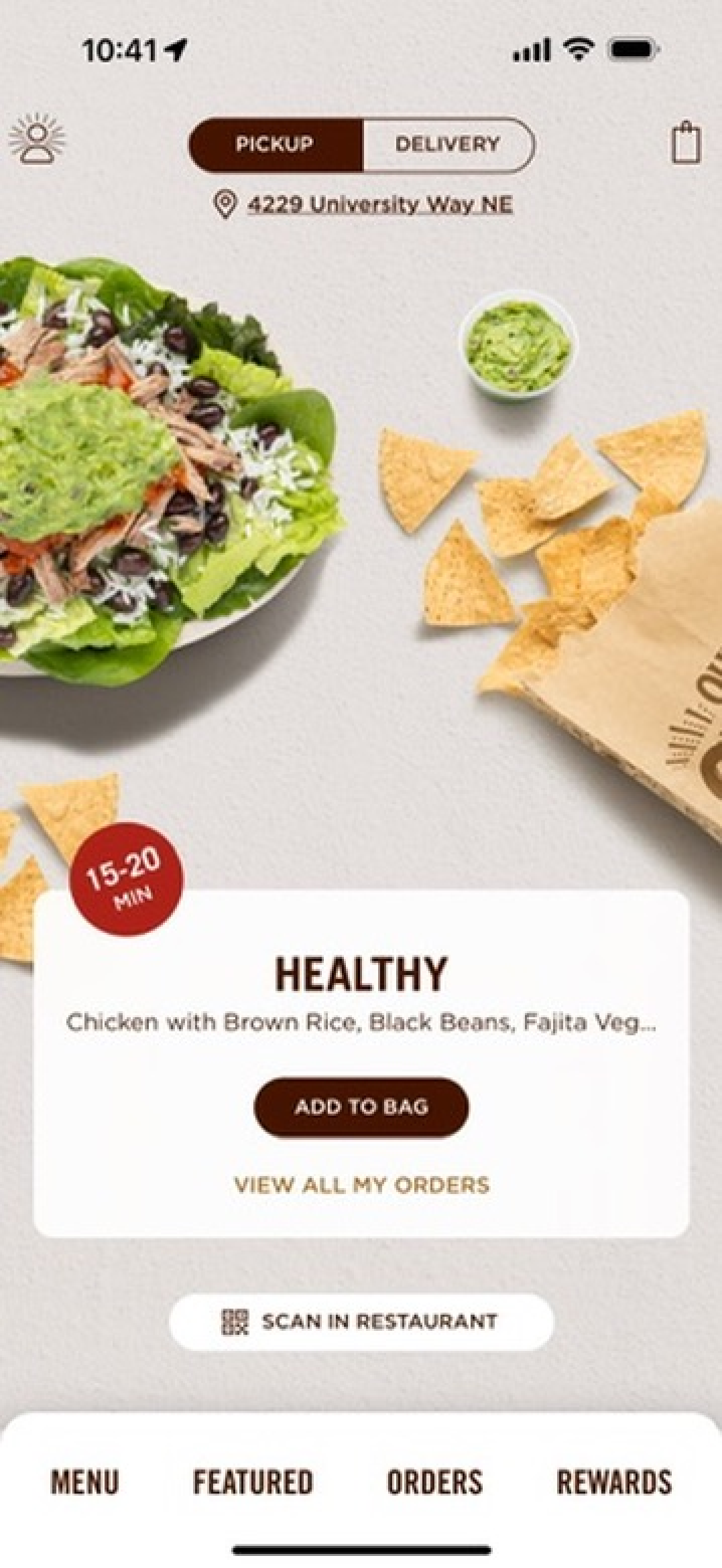
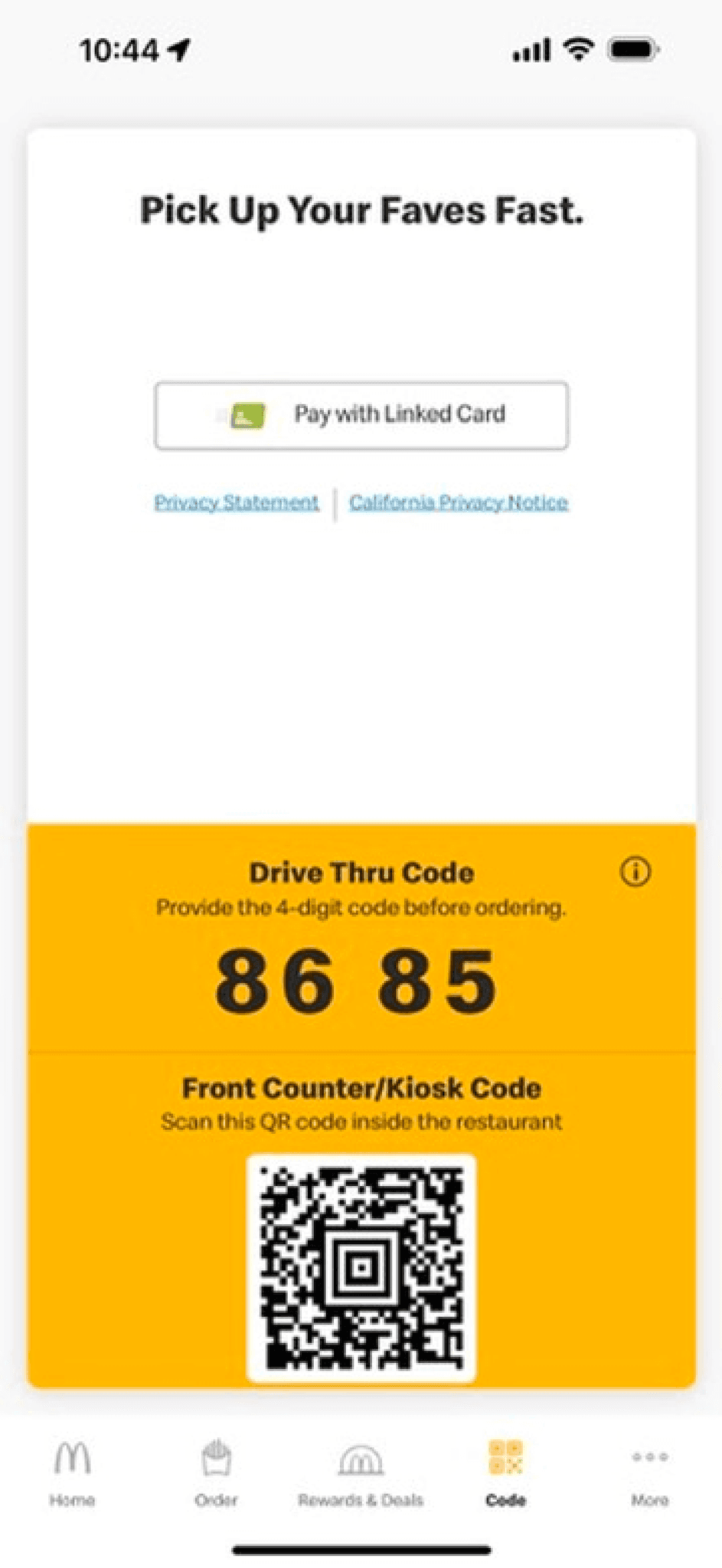
We benchmarked 12 retail apps, Target Circle, Starbucks, Amazon, Sam's Club and more, evaluating speed, simplicity, security, and scalability.

Target Circle mobile app screenshot
Target scan mobile app screenshot
Chipotle mobile app screenshot
Chick-fil-A mobile app screenshot
Lowes mobile app screenshot
Amazon mobile app screenshot
Starbucks mobile app screenshot
Sam's Club mobile app screenshot

What we learned

Starbucks & Chick-fil-A

Loyalty-first scanning creates habit loops. Customers scan before they even order—the code becomes muscle memory, not a checkout chore.

Target Circle

Combining identity + offers in a single scan drives adoption. But burying the code behind multiple taps hurts speed at the register.

Amazon (Just Walk Out)

Frictionless identification is the gold standard, but requires massive hardware investment. QR scanning gets 80% of the benefit at a fraction of the cost.

Sam's Club (Scan & Go)

Proves Walmart customers will adopt scan-based workflows when the value proposition is clear. Their exit-scan pattern directly informed our receipt flow.

The strongest experiences shared three qualities: speed (sub-3-second identification), simplicity (single-action scan), and scope (one code for everything). We used these as benchmarks for Walmart Pass.

Core Principles

🔒
Secure

QR rotates every 30 seconds, encrypted token only. Zero exposed personal data.

Fast

Code generation and transaction completion under 2 seconds.

🌐
Inclusive

Cash, card, wallet, or Walmart+: every customer can identify themselves.

📈
Scalable

Any Walmart team can build on top without redesigning the core.

Design Explorations

Two patterns tested: full-screen immersive vs. bottom sheet modal.

Explored

Full-Screen Approach

  • Immersive, dedicated experience
  • Takes over entire screen, breaks navigation
  • Limited scalability for additional features
  • Harder to dismiss and retry
  • Doesn't align with iOS/Android sheet patterns
Final Design

Bottom Sheet Approach

  • Maintains app context and navigation
  • Scales gracefully with new features
  • Mobile-native pattern reduces learning curve
  • Quick dismiss and retry supported
  • Aligns with platform design guidelines
Design explorations showing full-screen and bottom sheet approaches

How we tested and validated

Three validation layers: qualitative discovery, prototype testing, and engineering feasibility.

Discovery
Customer & associate interviews

Conducted 14 in-store interviews across 3 Supercenter locations. 8 customers and 6 associates. Key finding: associates estimated 30-40% of checkout interactions had no digital identity attached, confirming the GMV traceability gap.

Prototype Testing
Timed scan-to-identify sessions

Ran moderated prototype walkthroughs with 10 participants using the Figma prototype on physical devices. Measured scan-to-confirmation time at a median of 2.3 seconds. 9 of 10 participants completed the flow without guidance.

Feasibility
Engineering architecture review

Partnered with the platform engineering team across 4 technical deep-dives. Validated that the existing Walmart Pay API could support encrypted QR generation with 30-second rotation without additional infrastructure.

A note on the metrics above: The 2.3s identification time comes from moderated prototype testing, not production data. The 100% GMV traceability and 4,600+ store targets are projections based on the platform architecture review. We're transparent about these because the project was paused before a production pilot could run.

How we shaped the experience

01 / 03
In-Store Mode with Code Accessible

Geofence triggers Store Mode on entry. The Pass code lives front and center alongside store tools, one tap away.

Geofencing Context-Aware UI Zero-Tap Access
Hi, Emilia
Welcome to your store
📍 Carrollton Supercenter
WalmartPass
Connect and pay
🔍 Find item
📱 Check price
02 / 03
Bottom Sheet for Contextual Flows

Bottom sheet slides up from Store Mode, connection, payment, and receipt all in one flow without losing context.

Bottom Sheet UX Progressive Disclosure Mobile Patterns
Connected
Smart payment
Visa •••• 1234
Pay with Walmart Pass
03 / 03
Unified Across Services

Same code works at self-checkout, returns, and Auto Care. One pattern learned, used everywhere. The QR identity layer was designed as platform-level infrastructure. Beyond the initial 5 services, the architecture supports 15+ future integrations without requiring customers to learn a new interaction.

Platform Thinking Scalability Consistency
Walmart
Pass
💳
Checkout
🔄
Returns
🔧
ACC
Walmart+

Final Designs

Scannable code in Store Mode, surfaced by geofence. Scan → instant connection → payment suggestion based on cart contents. Green checkmark confirmation.

In prototype testing across 10 participants, the median identification time was 2.3 seconds, well below the 3-second industry benchmark set by competitors like Target Circle and Starbucks Rewards. Today, 40% of in-store GMV has zero customer traceability. With Walmart Pass, the projected traceability reaches 100% across all 4,600+ stores.

End-to-End Journey

1
Enter Store
Geofence triggers Store Mode automatically
2
Scan Pass
Cashier or self-checkout scans QR code
3
Connected
Instant confirmation, identity linked to session
4
Smart Pay
Suggests best payment method based on cart
5
Exit Pass
Digital receipt with barcode for door verification

Click the phone to step through the checkout flow

Future Functionalities

Walmart Pass was designed as a platform foundation for 15+ planned integrations across Walmart's service ecosystem.

Money Services - Cash check deposits and transfers
Money Services
Returns - Digital receipts and initiating returns
Returns
Checkout - Contactless payment with suggestions
Checkout
ACC - Auto care appointments and services
ACC
Walmart+ Benefits - Fuel discounts and free delivery
Walmart+ Benefits

What I owned vs. supported

Led
0→1 product definition and design vision
Competitive analysis across 12 retail apps
End-to-end UX from scan to transaction complete
Prototype development for stakeholder reviews
Design system pattern establishment for Pass
Final design delivery and engineering handoff
Contributed
Engineering feasibility sessions with platform team
Customer research planning with UX research
Go-to-market rollout strategy with product
Performance metrics and success criteria
Store operations feedback and associate training
Post-launch monitoring and iteration planning

What this work set up

Fully designed, prototyped, and validated. Paused before launch due to company-wide restructuring. The design work established a foundation for how the team thinks about in-store identity.

100%
Projected GMV Traceability
2.3s
Validated Identification Time
4,600+
Stores Targeted
5
Services Designed
What was validated
Design validated through stakeholder reviews and eng feasibility sessions
Competitive analysis framework adopted by adjacent product teams
Platform architecture approved by engineering for future implementation
Design system patterns reused across Walmart Pay and store-mode features
Research insights informed roadmap priorities for in-store identity
What it could have unlocked
Platform extensibility for 15+ planned service integrations
Cross-retail ecosystem connecting Walmart+, Sam's Club, and specialty services
Privacy-preserving customer profiling for personalized in-store experiences
Foundation for scan-and-go and autonomous checkout innovations
Expansion to curbside pickup and last-mile delivery identification

What I took away

This project got shelved during a company-wide restructuring, and I won't pretend that wasn't frustrating. But it reinforced something I keep coming back to: the value of design work isn't only measured by whether it launches. The identity framework we built became a reference for how other Walmart teams thought about in-store digital touchpoints. The platform model influenced cross-service integration conversations that outlasted the project itself. And the research itself, including 14 in-store interviews, 10 prototype sessions, and engineering feasibility reviews, produced insights that didn't expire when the roadmap shifted. Sometimes the most important thing a designer can do is build the thinking that makes the next version possible, even if someone else gets to ship it.